|
| A Soyuz 1 launch cover postmarked in Kaluga with a hand cancel on on April 23, 1967. |
Soyuz 1 was launched from the Baikonur Cosmodrome on April 23, 1967, carrying cosmonaut Vladimir Komarov on the first crewed flight of the new Soyuz spacecraft. The mission was intended to test the spacecraft in crewed flight and to conduct a rendezvous and docking with Soyuz 2, which was scheduled to launch the following day with three cosmonauts. Two of the Soyuz 2 crew were then expected to transfer to Soyuz 1 by spacewalk.
 |
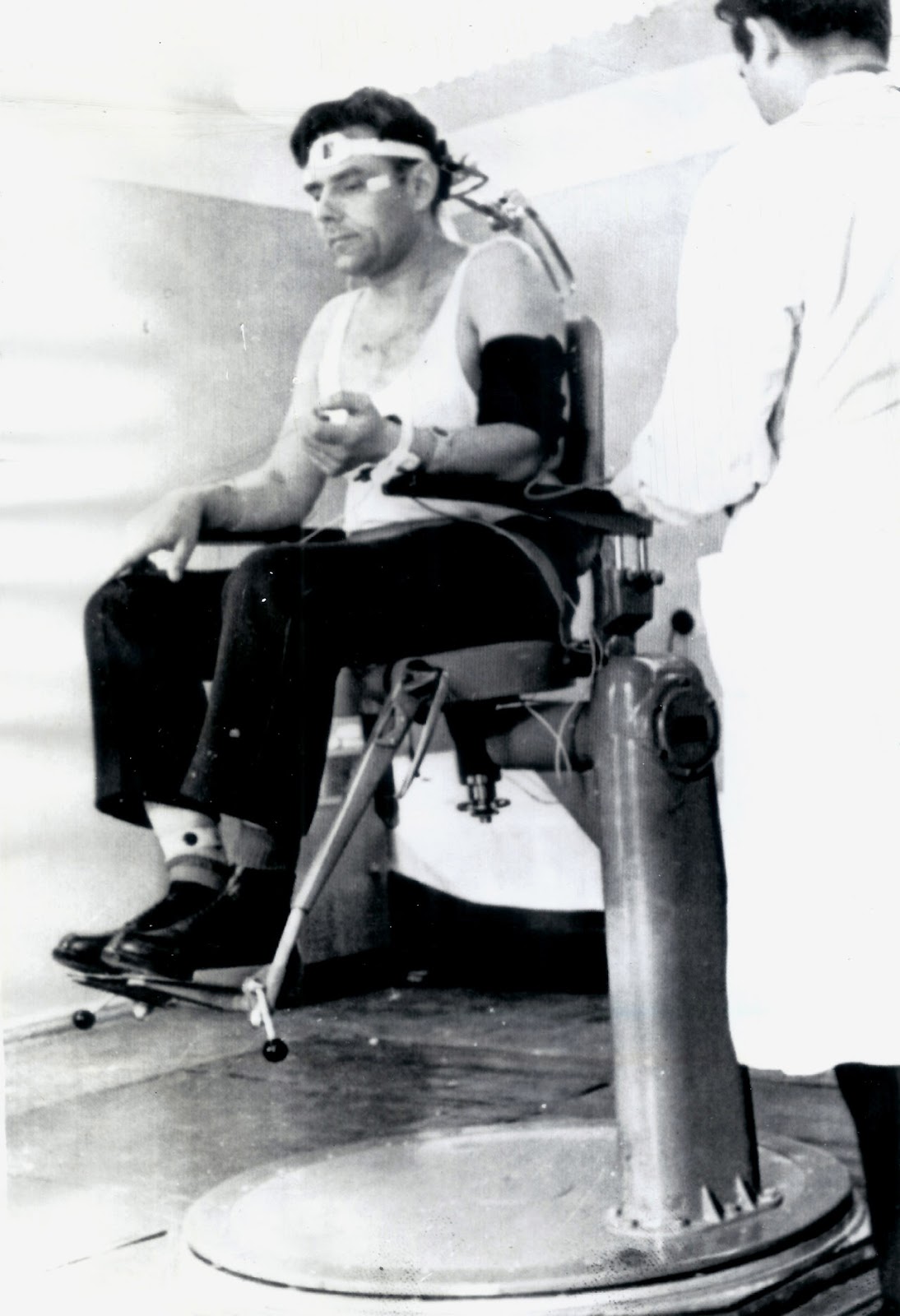
| Photo: This image published by an official Communist news agency, shows veteran cosmonaut Vladimir Komarov undergoing a medical test prior to his space mission on April 23, 1967. |
Soon after reaching orbit, Soyuz 1 experienced serious technical problems. One of its two solar panels failed to deploy, leaving the spacecraft with insufficient electrical power, while problems with the orientation system made maneuvering difficult. As a result, the planned Soyuz 2 launch was cancelled and Komarov was ordered to return to Earth. After an unsuccessful automated reentry attempt, he manually oriented the spacecraft and successfully initiated the descent during the 18th orbit.
 |
| A Soyuz 1 launch cover postmarked in Liepaja with a hand cancel on April 23, 1967. |
The reentry itself was successful, but the parachute system failed during descent. The main parachute did not deploy properly, and the reserve parachute became tangled with the malfunctioning system. The descent module subsequently crashed in the Orenburg region of the Soviet Union on April 24, 1967, killing Komarov. He became the first human to die during a spaceflight. The accident led to extensive redesign and uncrewed testing of the Soyuz spacecraft before crewed flights resumed with Soyuz 3 in October 1968.
 |
 |
| Photo: Colonel Vladimir Komarov, who lost his life during the Soyuz 1 mission when his descent module crashed to the ground because of a parachute failure. |